![]() |
Field Trip Parking
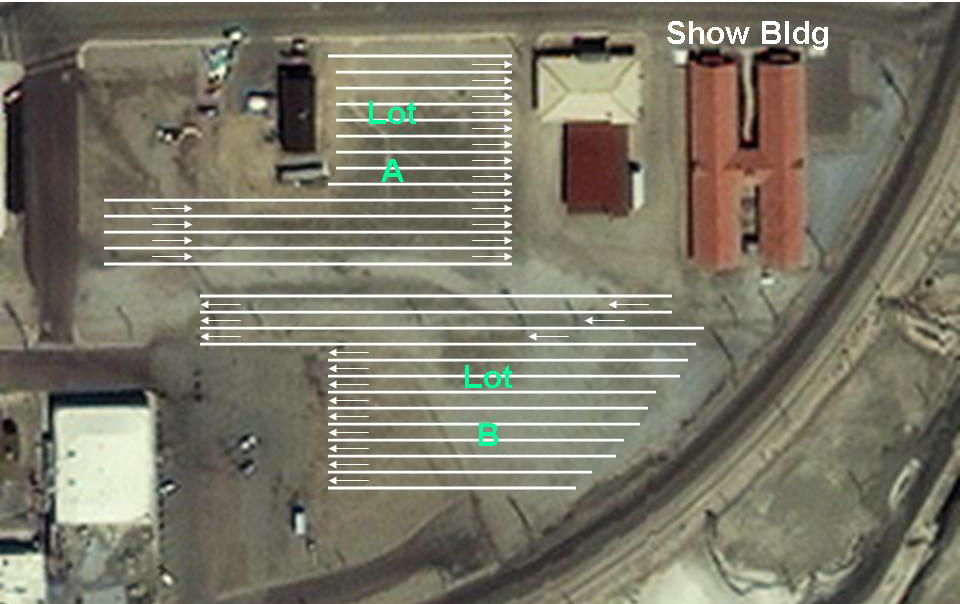
1. There are 2 parking lots - park in either one 2. Park in numbered lanes - lane 1 leaves parking area first, followed by lane 2, then 3, etc. 3. Please park close to the car in front of you. We have about 300 cars to park and a very limited parking area. 4. Follow directions of parking assistants 5. Park your car first, then purchase ticket 6. Both lots go to the same collecting site 7. Both lots leave for field trip at same time 8. Both lots arrive at collecting site at same time 9. Cutting into line is NOT ALLOWED If you cut into line you can be required to leave field trip immediately |
| Field Trip Ticket
Prices
1. Saturday morning (9-11:30am) - Mud $10.00 per car 2. Saturday afternoon (2:30-5pm) - Blow Hole $10.00 per car 3. Sunday (9am-1:30pm) - Pink Halite $15.00 per car 4. Sign your tickets. Tickets will be collected inside lake gate |
Field Trip Ticket
Purchase
1. Tickets are sold only at the show - no advanced sales 2. Tickets are sold outside in the center of the "H", on north (Main Street) side 3. Tickets for all remaining trips can be bought whenever the sales are open 4. Ticket sales hours are: 7:30-9am Saturday and Sunday morning 1:30-2:30pm Saturday afternoon |
| Field Trip Supplies
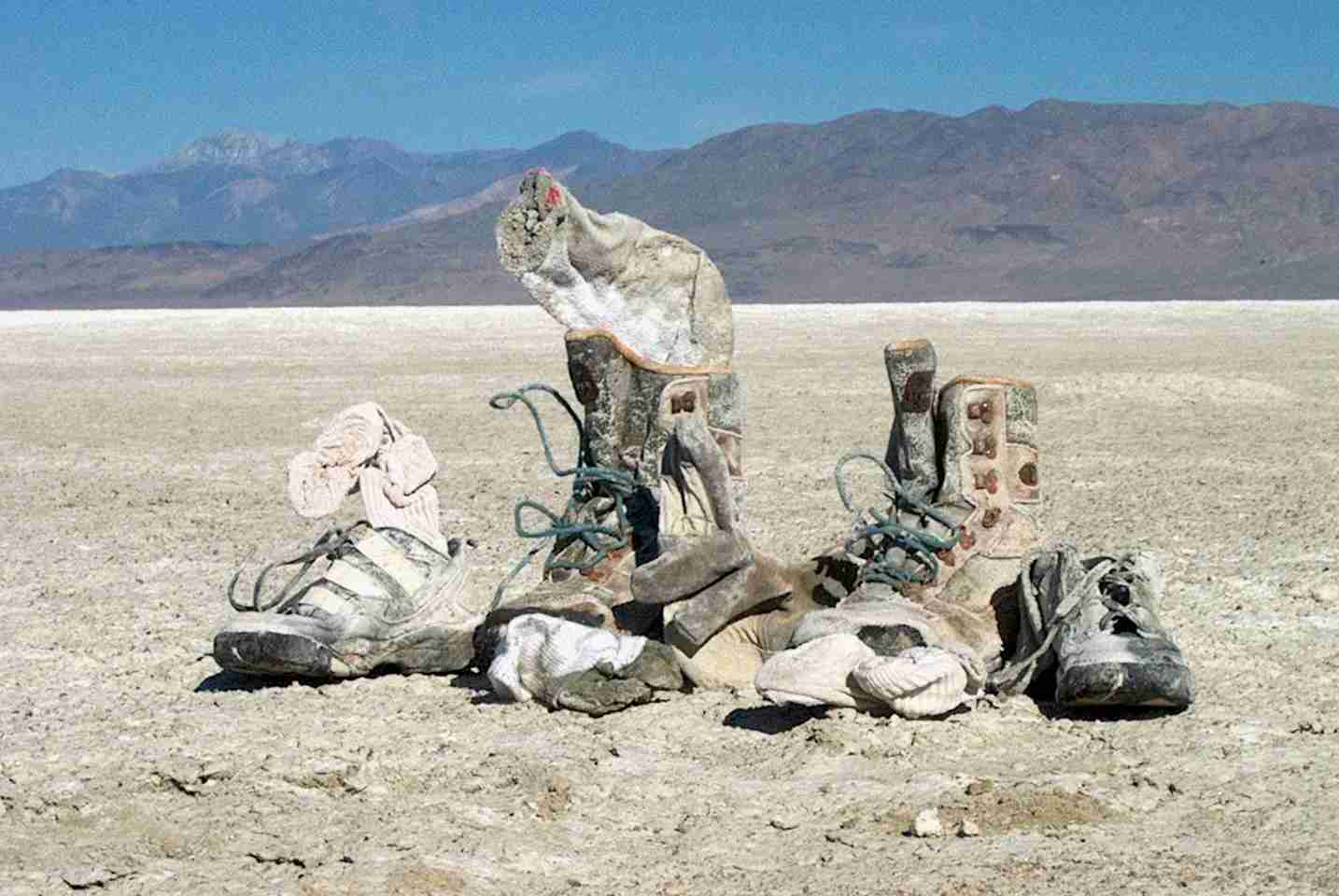
1. Wear "sacrificial" clothes when collecting (see pictures below) 2. Most field trip supplies can be purchased at the show (General Store inside show bldg) 3. Supplies needed are different for each trip - see information on trip description pages |
Are These for
Everyone?
1. Yes, all ages (1-100) can and do go on these field trips, and everyone has a good time 2. Colleges, high schools and scout troops all use these trips for educational purposes 3. Serious mineral collectors find these field trips rewarding for their beautiful and unusual minerals |
![]() |
Gem-O-Rama 2003 field trips.
Note that after the mud dried, the shoes were also very stiff. While washing in water may largely restore the shoes to a usable state as knock-around shoes, they will never approach new shoes in feel or look. |
|
|
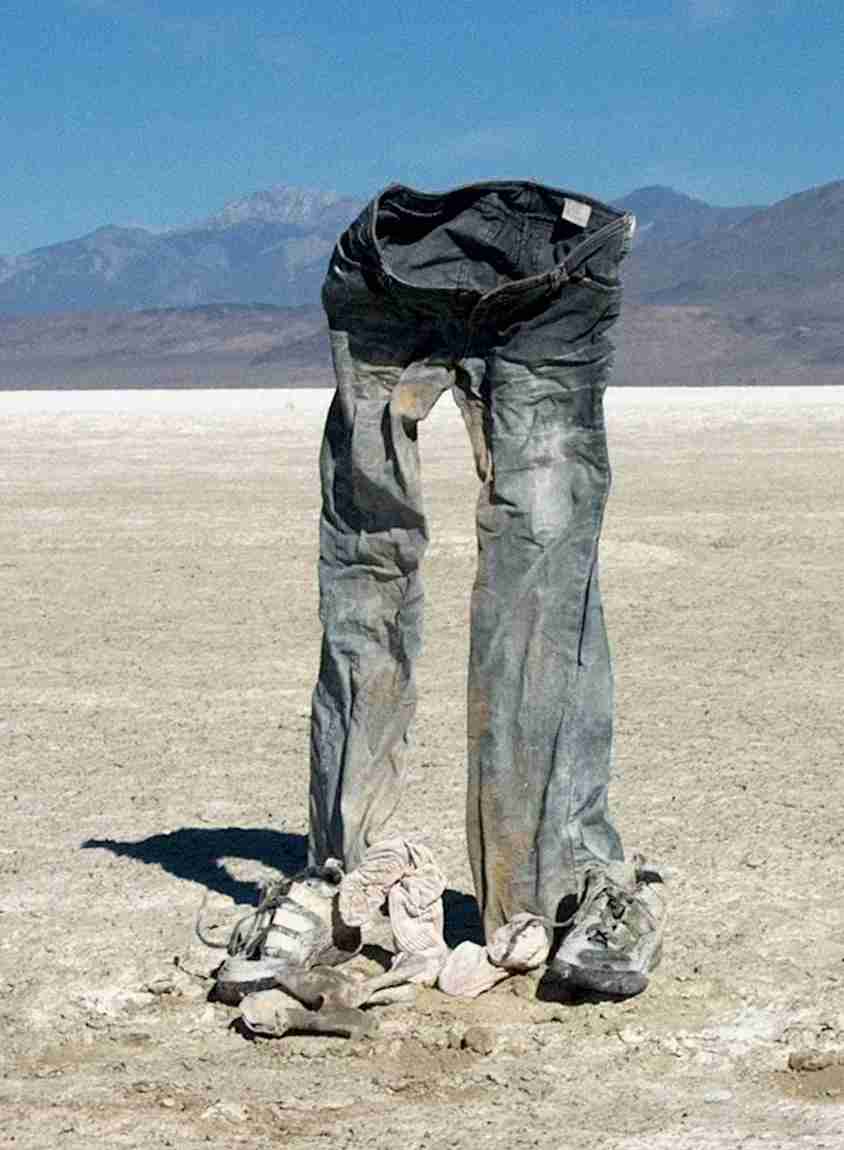
I took them out on the mud flats and stood them on end for this picture.
Talk about using too much starch. If you get your clothes wet with brine and allow it dry, the salts in the brine will crystallize and this will make your clothes as stiff as boards. If you were to walk very far in these pants, they would painfully chaff your skin. Fortunately, the salts are all soluble, so simply washing them will remove the salt and make them soft again. This washing can be at the water truck provided at the collecting sites, with water you bring in your vehicle, or at home (but you will want to change clothes after the field trip, not wear the salt-encrusted clothes home) |
![]() |
WHY DO YOU START THE SHOW ON THE SECOND SATURDAY IN
OCTOBER?
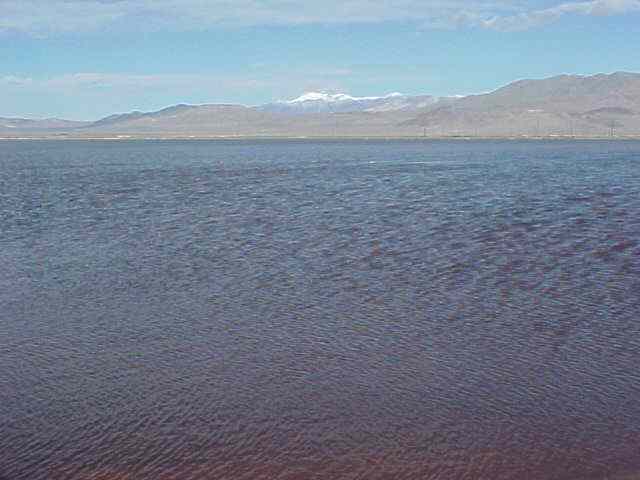
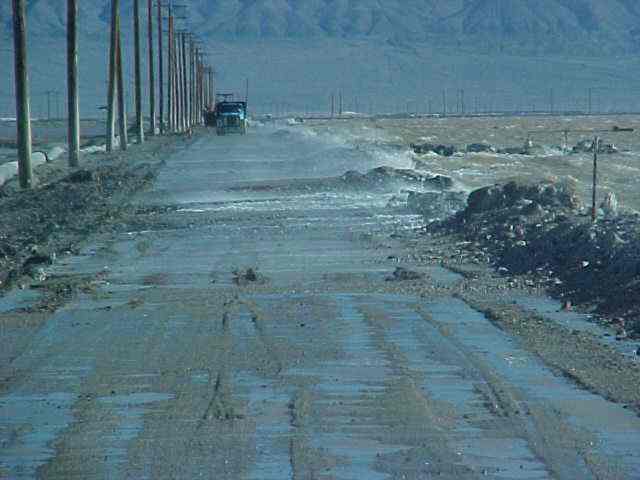
The picture to the left shows the surface of the "dry" lake in January 2005. The area shown is just north of the pink halite collection area. The picture to the lower left shows Cement Plant Road with the wind blowing waves across it and trucks coming to repair the road. This is the exit road from the pink halite field trip and one of the entrance roads for all three field trips. As you can tell, it would not be safe for general use by the public. This is typical of many winters when the surface becomes
covered with
water, or more correctly, brine. Less than two weeks after the
2004
show we had a series of rain storms that flooded the surface.
When
this happened, the rain water was unsaturated and dissolved all of the
specimens that were not collected during the show. This included
all the mud specimens, all the blow hole specimens and all of the
unfound
and uncollected pink halite. Therefore, we could not have field
trips
any later in the year than mid October.
|
![]() |
WHY DO YOU START THE SHOW ON THE SECOND SATURDAY IN
OCTOBER (continued)?
Because the surface will remain at least paritally flooded into late May, it would not be possible to schedule field trips before then. Then, by early June the afternoons can be very hot. We have seen temperatures as high as 115oF in mid June. This is too hot for our field trips, especially the pink halite trip which requires substantial physical work. Not until early October is it cool enough to have field trips to collect minerals from Searles "Dry" Lake. So as you see, we have our show at the only time of year when it is possible. |
![]()
| Home | Site Map | Revised 10/21/2007
All contents of this web page are the property of
the
Searles Lake Gem & Mineral Society.
Reproduction or other uses of any of these contents
without the written permission of the owner is prohibited.
If you want to use any of the contents, contact the
SLG&MS at any of the above.